WhatsApp inches forward on bringing Reactions to its app

WhatsApp, owned by Meta, is actively developing its app and working on new features. The app's latest beta  on iOS reveals that a new feature may be coming soon worked on reactions to iMessage-like messages.  In their latest findings, they discovered that a relevant setting has appeared in the new beta  on iOS. WABetaInfo shared that WhatsApp version 22.72  on iOS adds a new Reactions Notifications toggle to app settings.  With this toggle  visible to beta users, the feature may come to the platform fairly quickly. Alternatively, the company may have accidentally revealed this setting and may remove it in future betas if the Reactions feature is not yet ready. In 2020, Mark Zuckerberg shared that Meta (Facebook at the time) planned to merge the messaging systems of Facebook, Instagram, and WhatsApp. He said plans won't materialize until 2022. With WhatsApp likely to add reactions to messages soon, the gap between it and Facebook/Instagram direct messages (DMs) is narrowing even further.  The merger between Facebook and Instagram DMs has already happened, as both platforms support the same messaging features (for the most part). WhatsApp is still far from becoming similar to either of these two services. It remains to be seen whether the merger of the three will take place this year. It is also possible that the company is prevented from making this potential move for monopoly reasons.
https://bit.ly/3trrbsZ

Netflix raises monthly subscription prices in U.S., Canada

Illustration by Alex Castro / The Verge Netflix is ​​raising the prices of all  its plans in the United States today. The enterprise standard plan will increase from $14 to $15.50 per month, while the 4K plan will increase from $18 to $20 per month. The basic plan, which does not include HD, goes up to $10 per month from $9 per month. Prices in Canada are also on the rise. Price increases take effect immediately for new subscribers. For existing subscribers, the changes will be rolled out "gradually", with Netflix promising to email members 30 days before the price hike takes effect. The prices for a Netflix package have steadily increased over the past few years.  The standard plan went from $13 to $14 per month at the end of 2020, after dropping from $11 to $13 in 2019. Previously, Netflix raised prices in 2017 and 2015. When Netflix announced its first  price hike in 2014, the company was so worried about losing subscribers with a $1 a month hike that it allowed existing members to hold their price for two years. It hasn't offered such a generous perk in the years since then. The price hikes come during a successful but challenging moment for Netflix. The company already has a wealth of subscribers across the US, and adding more is a challenge — making price hikes an obvious answer for how it can make more money. At the same time, Netflix is now competing with several other serious streaming services for attention, including Disney Plus and HBO Max, and it’s been spending big on content to keep up. “We are updating our pricing so that we can continue to offer a wide variety of quality entertainment options,” a Netflix spokesperson told Reuters.  "As always, we offer a range of plans so members can choose a price that fits their budget. Netflix isn't the only service that has increased prices lately. Hulu has increased the price of its funded tiers by advertising and without advertising of $1 per month in October.
https://bit.ly/3GEe5wo

North Korean hackers said to have stolen nearly $400 million in cryptocurrency last year

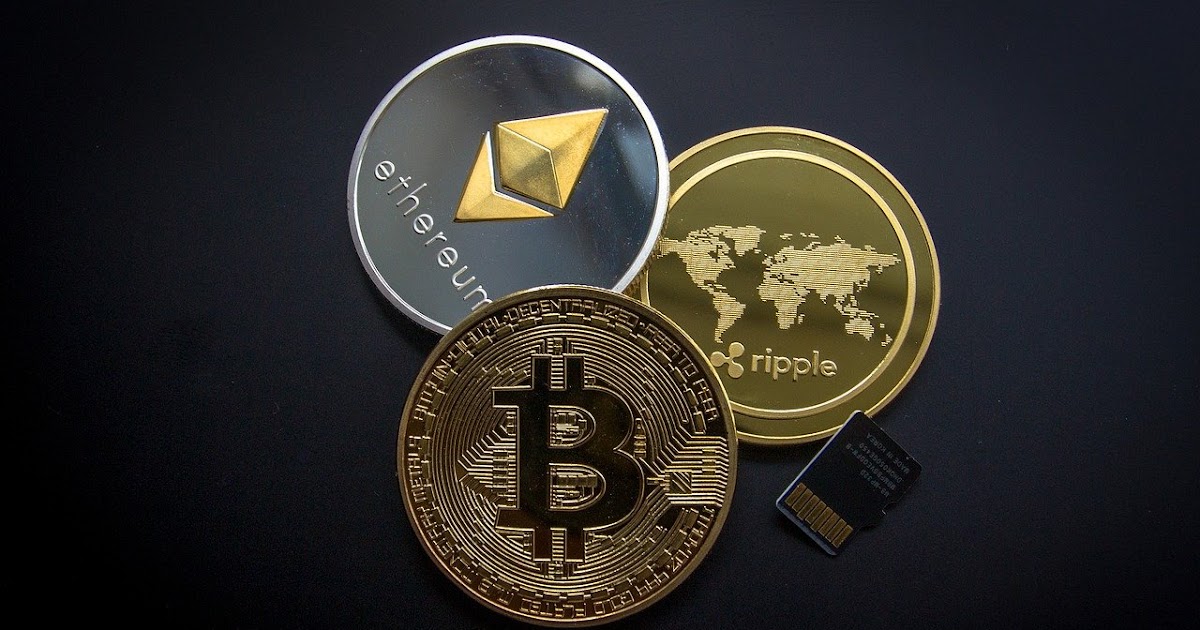
North Korean hackers stole nearly $400 million worth of cryptocurrency in 2021, making it one of the most profitable years yet for cybercriminals in the severely isolated country, according to a new report.  Hackers launched at least seven different attacks last year, mostly targeting corporate investments and centralized exchanges with a variety of tactics including phishing, malware and social engineering, according to a report by Chainalysis, a company that tracks cryptocurrencies.  Cybercriminals attempted to gain access to organizations' "hot" wallets: Internet-connected digital wallets, and then transfer funds to accounts controlled by the DPRK. The thefts are the latest indication that the heavily sanctioned country continues to rely on a network of hackers to help fund its domestic programs.  A confidential UN report previously accused North Korean regime leader Kim Jong Un of carrying out "operations against formerly moving financial institutions and virtual currency" to pay for weapons and keep the country afloat North Korean economy.  Last February, the US Department of Justice  charged three North Koreans with conspiring to steal more than $1.3 billion from banks and businesses around the world and orchestrating crypto thefts. digital currency. "North Korea is, in most respects, cut off from the global financial system by a long sanctions campaign by the United States and its foreign partners." said Nick Carlsen, an analyst at blockchain intelligence firm TRM Labs. “As a result, they have taken to the digital battlefield to steal cryptocurrencies, essentially [a] high-speed internet bank robbery, to fund weapons programs, nuclear proliferation and other activities.  North Korea's hacking efforts have benefited from this.The rise in value of Rising prices and the use of cryptocurrencies have generally made digital assets increasingly attractive to malicious actors, which led to more successful cryptocurrency thefts in 2021.  According to Chainalysis, most of the thefts in the past year were committed by the Lazarus Group, a hacker group with ties to North Korea that was previously  linked to the  Sony Pictures hack, among other incidents. ie North Koreans, in addition to sanctiones cybersecurity defensive measures such as crimes such as criminql have no real chance of being extradited.  As the cryptocurrency market becomes more popular, "we are likely to see continued interest from North Korea in targeting cryptocurrency companies that are young and that are building  cyber defenses and anti-virus controls. -money laundering," Carlsen said.
https://bit.ly/33EXbz2

Teen hacker finds bug that lets him control 25+ Teslas remotely

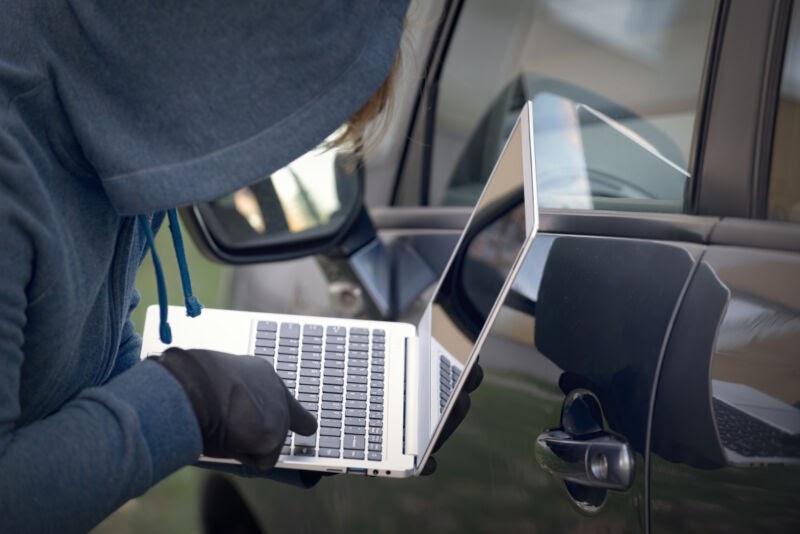
  The downside with offering APIs to interact with a car is that someone else's security problem might become your own. Getty Images A young hacker and computer security researcher has found a way to remotely interact with more than 25 Tesla electric vehicles in 13 countries, according to a Twitter thread he posted yesterday.  David Colombo explained in the thread that the flaw "wasn't a vulnerability in Tesla's infrastructure. It's the owner's fault." He claimed to be able to remotely disable a car's  camera system, unlock doors and open windows, and even start driving without a key. It could also determine the  exact location of the car. However, Colombo has made it clear that it can't actually interact with Tesla's steering, throttle, or brakes, so at least we don't have to worry about an army of remote-control electric vehicles doing a Fate reenactment.  Colombo says he reported the issue to Tesla's security team, which is investigating the matter. On a related note, early  Wednesday morning, a third-party app called TezLab reported seeing “multiple thousand Tesla Authentication Tokens expiring at the same time.”  The TezLab application uses Tesla's  APIs which allow applications to perform operations such as accessing the car and activating or deactivating the anti-theft camera system, unlocking doors, opening windows, etc
https://bit.ly/3fox81t

Tesla delays initial production of Cybertruck to early 2023 - source

Image Credit:Jeenah Moon/Reuters Tesla Inc (TSLA.O) aims to start initial production of its long-awaited Cybertruck by the end of the first quarter of 2023, pushing plans to start production later this year, a person familiar with the matter told Reuters on Thursday. He said the delay comes when Tesla changes the features and functions of the electric pickup to make it a compelling product as competition heats up in the segment. Tesla is expected to produce a limited production of the Cybertruck in the first quarter of 2023 before ramping up production, the source said. Tesla did not immediately respond to a request for comment. Tesla, the world's largest electric car maker, produces electric sedans and SUVs, but has lost the pickup truck segment, which is profitable and hugely popular in America.  Ford Motor Co (FN) and Rivian Automotive (RIVN.O). are ahead of Tesla in launching electric pickups.  Ford said early this month it will nearly double annual production capacity for its red-hot F-150 Lightning electric pickup to 150,000 vehicles ahead of its arrival this spring at U.S. dealers. Ford's market value topped $ 100 billion for the first time on Thursday, when Tesla shares fell 6.7% and Rivian's shares fell 7.1%. CEO Elon Musk, who unveiled the futuristic vehicle in 2019, had already delayed  production from late 2021 to late 2022.  Musk said he would provide an updated product roadmap during the earnings call for the Tesla on January 26. “Oh man, this year has been such a nightmare for the supply chain  and it's not over yet!” He tweeted in late November when asked about the Cybertruck.  Tesla recently removed a reference to its production schedule from its Cybertruck orders website. Last month, the website said, "You will be able to complete your setup as production nears in 2022." Now "in 2022" has been omitted. Tesla plans to produce the Cybertruck at its plant in Texas, which is slated to begin production of Model Y cars earlier this year.
https://bit.ly/3GvyVhl

AstraZeneca says third dose helps against Omicron

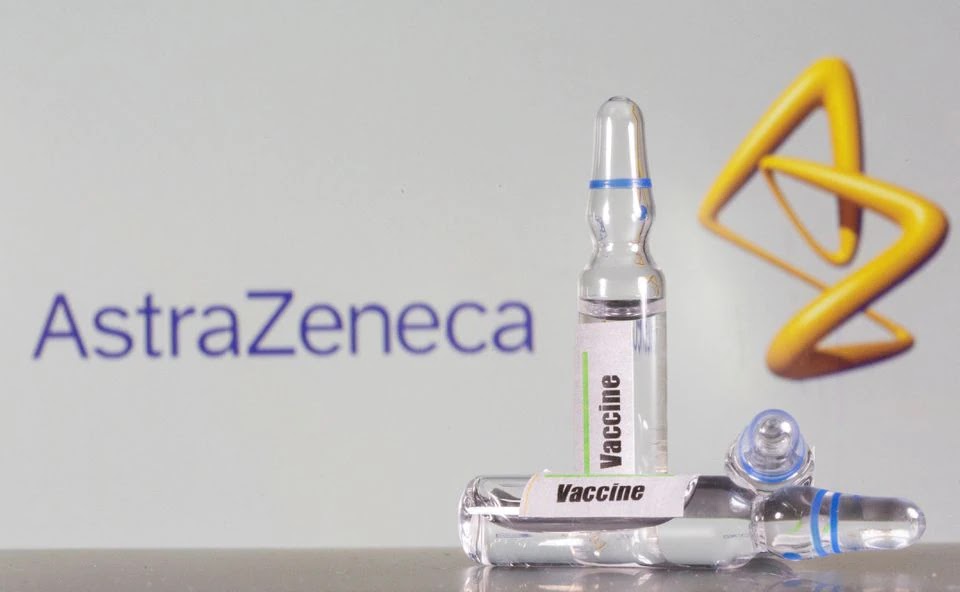
A test tube labelled with the Vaccine is seen in front of AstraZeneca logo in this illustration taken, September 9, 2020. REUTERS/Dado Ruvic/Illustration AstraZeneca said on Thursday that preliminary data from a trial showed that its COVID-19 shot, Vaxzevria, generated an increase in antibodies against the Omicron and other variants when given as a third booster dose. The increased response, also against the Delta variant, was seen in a blood analysis of people who were previously vaccinated with either Vaxzevria or an mRNA vaccine, the drugmaker said, adding that it would submit this data to regulators worldwide given the urgent need for boosters. AstraZeneca has developed the vaccine with researchers from the University of Oxford, and lab studies conducted by the university last month already found a three-dose course of Vaxzevria boosted antibody levels in the blood against the rapidly spreading Omicron variant. The brief statement on Thursday, which did not include specific data, was the first by AstraZeneca on the protective potential of Vaxzevria as a booster shot following a two shot-course of either an mRNA based vaccine or Vaxzevria. Vaccines base on mRNA technology are made by BioNTech-Pfizer and Moderna. The company said the findings “add to the growing body of evidence supporting Vaxzevria as a third dose booster irrespective of the primary vaccination schedules tested”. The data on Vaxzevria’s potential as a booster came from a comparative analysis in a trial testing a redesigned vaccine which uses the vector technology behind Vaxzevria but targeting the now-superseded Beta variant. AstraZeneca is trying to show the Beta-specific vaccine has potential also against other variants and more trial data is expected during the first half of the year. Separately, Oxford University and AstraZeneca last month started work on a vaccine specifically targeting Omicron though Astra – as well as other vaccine makers in similar development projects – have said it was not yet clear whether such an upgrade was needed. A major British trial in December found that AstraZeneca’s shot increased antibodies when given as a booster after initial vaccination with its own shot or Pfizer’s, but that was before the explosive spread of the Omicron variant. However, the study at the time concluded that mRNA vaccines made by Pfizer and Moderna gave a biggest boost to antibodies when given as a third dose. AstraZeneca and its contract manufacturing partners have supplied over 2.5 billion doses globally of its vaccine, even though it is not approved in the United States, while BioNTech-Pfizer have shipped about 2.6 billion doses. Source: ARY News
https://bit.ly/3Kc1XF4

BlackBerry 5G smartphone with physical keyboard officially confirmed for launch again

Image Credit: TCL OnwardMobility, owner of the BlackBerry brand, has now reiterated its commitment to provide a BlackBerry 5G  smartphone with a physical keyboard.  “Contrary to popular belief, we are not dead,” the company said. OnwardMobility, early last year after acquiring the BlackBerry brand, announced that it is working on a new BlackBerry phone that offers both 5G and a physical keyboard. While no such phone was launched in 2021, the company is back with a reiteration of that promise. The US-based company has proclaimed it is not dead and still has plans to release a BlackBerry 5G  device this year. The company attributes the lack of a launch in 2021 to the “various delays” it has exp While there are already concept renderings of the phone, there is little  information on how exactly it looks. We expect it to primarily retain the KEY2 form factor, but with a modernized outlook. We will be sure to keep you updated.  
https://bit.ly/3K0GazV